
In the twilight of an L.A. fall evening, fake fog swirls around Beckett Mansion and begins to set the mood for one of the biggest shows in immersive theater.
There is nervous anticipation for the newcomers. There are expectations for everyone else. Jon Braver is trying to beat all of that.
An annual highlight of the Halloween season, L.A.’s long-running Delusion show — this year subtitled Den of the Mosquito — is immersive theater at its most polished. Show creator Braver says it starts by putting people into a movie and leaving them with what he calls the “campfire effect” as they drive home.
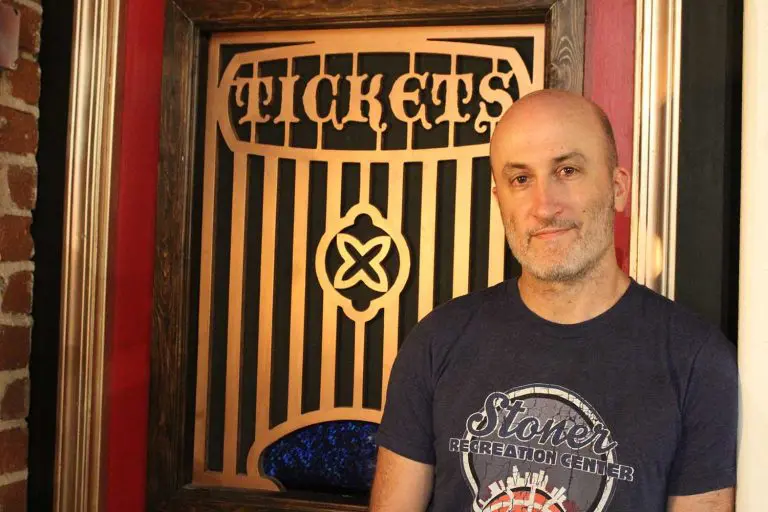
Braver is a writer, director, stuntman and actor whose credits include Indiana Jones and the Kingdom of the Crystal Skull, The Dark Night Rises, Iron Man and F:1, but Delusion has been his baby for 15 years. Regardless of which edition, the show has always been more than theater or scary mazes, and something Braver believes allows people to think.
“Putting people in wonderfully uncomfortable situations and getting them outside of their comfort zones is really important. I find that to be one of my purposes in life,” Braver says.
“I get to push people a little bit and usually it works out. I want them to have a shared adventure. Come out saying ‘This is the first time I’ve done something like this. I can’t believe I’ve experienced another world. Sure I could sit at home and watch a movie, but now I’m living inside one.’ I want them to feel the togetherness, especially it’s become more purposeful after the pandemic and AI and all that. Now it’s even more of a mission statement. This is the antidote to all that stuff. Nothing brings people together like shared trauma.”
The new show takes place in a 1920s New Orleans brothel. As an audience member, you’re an agent of a secret organization who will discover vampire prostitutes, mobsters and monsters in what is the longest and most interactive show in Delusion’s history.
With 12 different productions since Delusion began in 2011, Braver has a lot to look back on.
“I feel like it’s a solid body of work that I can be proud of,” he says. “In creating something with incredible artists and showcasing their work in a way that proves how vital this stuff really is.”
And how it resonates with people has come to mean a lot more than he thought.
“If I get run over by a truck tomorrow, there’s enough people out there that have stories to tell from their experience here, and people that met and became friends. People that have come and said ‘hey, we met last year and we have a baby back home with a babysitter.’ We’re setting up a marriage proposal for somebody in two weeks. It’s cool it’s become very special. But at the end of the day when everybody’s vying for attention, we’ve created something unique that people want to see. I feel like we’re still at that point where there’s not too many of these things. And I don’t think there’s anything really like what we’re doing. I’m looking forward to its evolution.”
The three-dimensional quality of the productions remains a tall order to deliver each season. And it starts with the same creative approach and the same questions.
“Don’t just repeat what you’ve done in the past. Try to come up with fresh stories and treat each year like a blank canvas,” he says. “What’s the hook? What’s the story? And how am I going to tell this story in the most impactful way without repeating tactics from the past? There are things I’ve done before, but it’s purposeful to the story. I approach each year like I get to tell a new story. It’s fun to do that. It’s daunting. The creative process is still difficult but the best possible thing in the world. It has to be difficult to make something good.”
And the how of the story telling is just as important as anything else.
“It’s a tough logistical issue to tell a story that people can follow along with easily while there’s so much going on. I always tell people, the first time you go to Delusion, it’s really fun, there’s lots of things going on, so you might not grasp the entire story we’re trying to tell. You come a second time and you’ll really dig deeper. If people can do it, I always recommend them coming more than once.”
Each production begins a lot like a film. And in Braver’s mind, it basically is.
“I write it like a film. When the team reads it, it’s in a screenplay format. The difference is, I treat the audience like a camera. I get them blocked in such a way that this is best angle for this and let’s move them over here,” he says. “I really just stand there and try to find the best blocking for the most amount of people. I know that not everybody is gonna get the right angle because it’s ten people, but as long as they stay together, and there’s no short people in the back, they can allow for people to see the action.”
“The fact that you are the protagonist and you are in the story gives you the best vantage point to absorb the story. Especially because the actors are speaking to you,” he says, but admits, “A lot of times, I have to strip down the narrative and make it more on the nose for people. Just to make it easier to follow. They gotta know why they’re there and who [the actor is playing] to stay fully engaged.”
But despite the larger, binding narrative, audience members can still be pulled off to get side stories and side experiences. It’s one of the highlights of Delusion shows.
“That’s very much by design and harkens back to the role playing games where there are side quests you can do, but a narrative you should follow. I know you’re not going to get the complete story, even though there’s a beginning, middle and end.” Braver says. “The idea is to create the campfire effect after the show. That’s really important that everybody gets out and asks ‘what did you do?’ and then you piece the story together and spend time together talking about it. That’s a mechanism I incorporate in every one of my shows. That seems to be working pretty well this year.”
Like most haunt events, the venue is critical to the vibe and storytelling potential. Delusion returned this fall to the Beckett Mansion — the huge, two-story, six-bedroom Colonial Revival historical landmark built in 1905 — after years at different locations around L.A.
“These are site specific shows. When I saw this one, I felt New Orleans. Stuff like The Blue Blade [2018-2019] show, was an abandoned theater. When I see it, it’s an unassuming frontage to the show, but going through there and going back to the Mayan era, that was an amazing concept. Every venue has its own story to tell. But it’s a blessing and a curse. The venue is the hardest thing to secure. Delusion fans have come to expect amazing venues, and so far, we’ve been able to achieve that.”
Many Delusion regulars might be a little too familiar with the building, which necessitated using it in very different ways and creating a carefully controlled perspective that subverts expectations.
“Throw people off from the beginning” he says of the effort. “Let’s change their expectations. Change the direction. Change the way they might think about all this stuff. It’s important.”
Time and practice has allowed Braver to get better at what he creates each year with each new iteration of Delusion, but it’s also allowed him the ability to let go, just a little, of his baby. It’s given him the ability to see the value others bring to it. Be a little less auteur and little more proud papa.
“At the beginning of Delusion I wanted 100 percent of the vision. Now, I’ve gotten to the point where I’m more experienced and mature, and if I get 70 percent of what I want, I’m in a good place,” he says.
“I’ve gotten better about writing the shows and how they’re gonna work. I can easily place myself in the audience perspective and see what would work and what wouldn’t. It’s about expectance of the vision,” Braver says. “It’s also about not being so unbelievably precious to it. It’s my baby, but I bring on the right team, and I want them to put their stamp on it. I tell the actors the same thing, ‘You’re going to make this so much better and do things I didn’t even imagine.’”